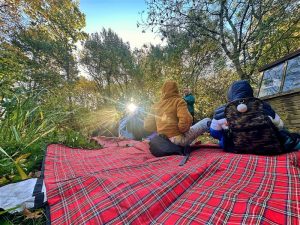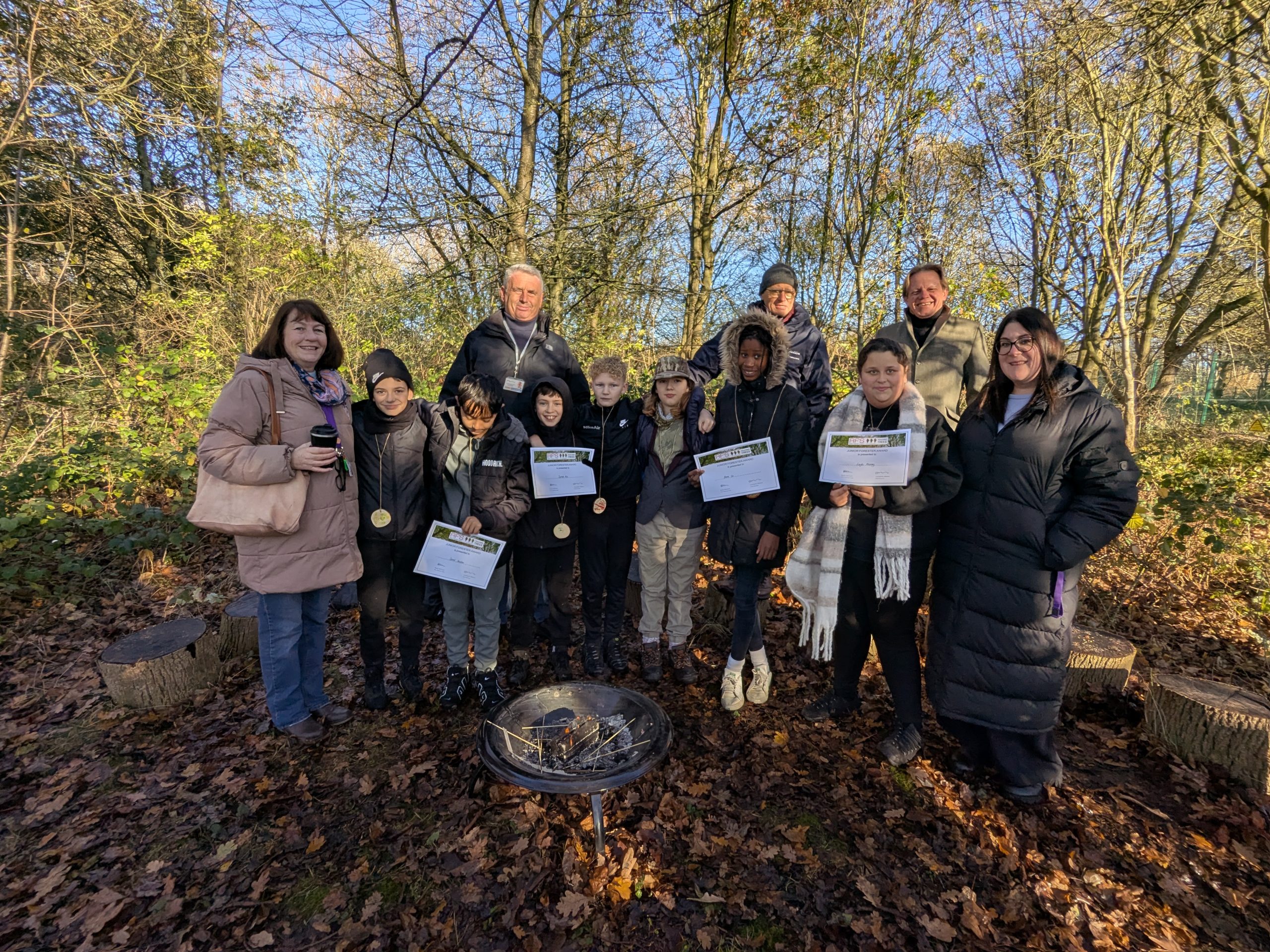
For the past five years, the environment charity PECT has been giving both primary and secondary school students the chance to take part in the Royal Forestry Society’s Junior Forester Award. This six-week programme immerses young people in a woodland environment, offering hands-on opportunities to explore what grows and lives there. Throughout the course, students gain a deeper understanding of local ecosystems and are encouraged to take positive action to protect and enhance nature – both during the sessions and beyond.
The course specifically focuses on supporting students who may find the transition from primary to secondary school challenging, as well as those who struggle to integrate once they begin at a new school. Thanks to the support of Castor Parish Council, which has generously allowed access to its Copse area this autumn, PECT has been able to deliver the Junior Forester Award to a group of students from the City of Peterborough Academy.
Testimony from the recent cohort Inclusion Lead –
This opportunity has had a profound positive impact on our SEN students, providing them with a unique learning environment where they can explore, reflect, and grow beyond the boundaries of a traditional classroom. The natural setting encourages curiosity and autonomy, allowing students to engage in hands-on activities that build problem-solving skills and promote sustained attention. Many students who previously struggled with classroom-based learning have shown noticeably higher levels of engagement during the sessions, demonstrating increased motivation, willingness to participate, and enjoyment in learning.
One of the most significant developments observed is the boost in students’ confidence, by offering achievable challenges, opportunities for leadership, and the freedom to develop at their own pace. SEN students who often experience anxiety or hesitation in structured environments have flourished when given the chance to succeed in practical, meaningful tasks. Staff have reported marked improvements in self-esteem and independence, with students becoming more proactive, resilient, and willing to take safe risks. Communication has also seen substantial improvement. The collaborative nature has encouraged the students to express their ideas, negotiate roles, and communicate their needs more clearly. Whether working together to build shelters, identify wildlife, or solve team challenges, they have naturally developed stronger social and verbal communication skills. Many have shown greater confidence in interacting with peers and adults, which has translated into more positive relationships and classroom behaviours. Importantly, these improvements are not only observed in school; they have been echoed by parents at home.
Families have reported noticeable changes in their child’s confidence, willingness to talk about their day, and the ability to communicate their thoughts and feelings more effectively. Parents have also highlighted increased independence, improved emotional regulation, and greater enthusiasm. The consistency of these reports reinforces the significant, lasting impact that the opportunity offer by PECT has had on our students.
Your school could also get involved, visit Optional Extras – Climate Education